
HACCP and CCP Monitoring Records by Voice
What the rules expect from a CCP record, where paper logs fall short, and how spoken checks become audit-ready
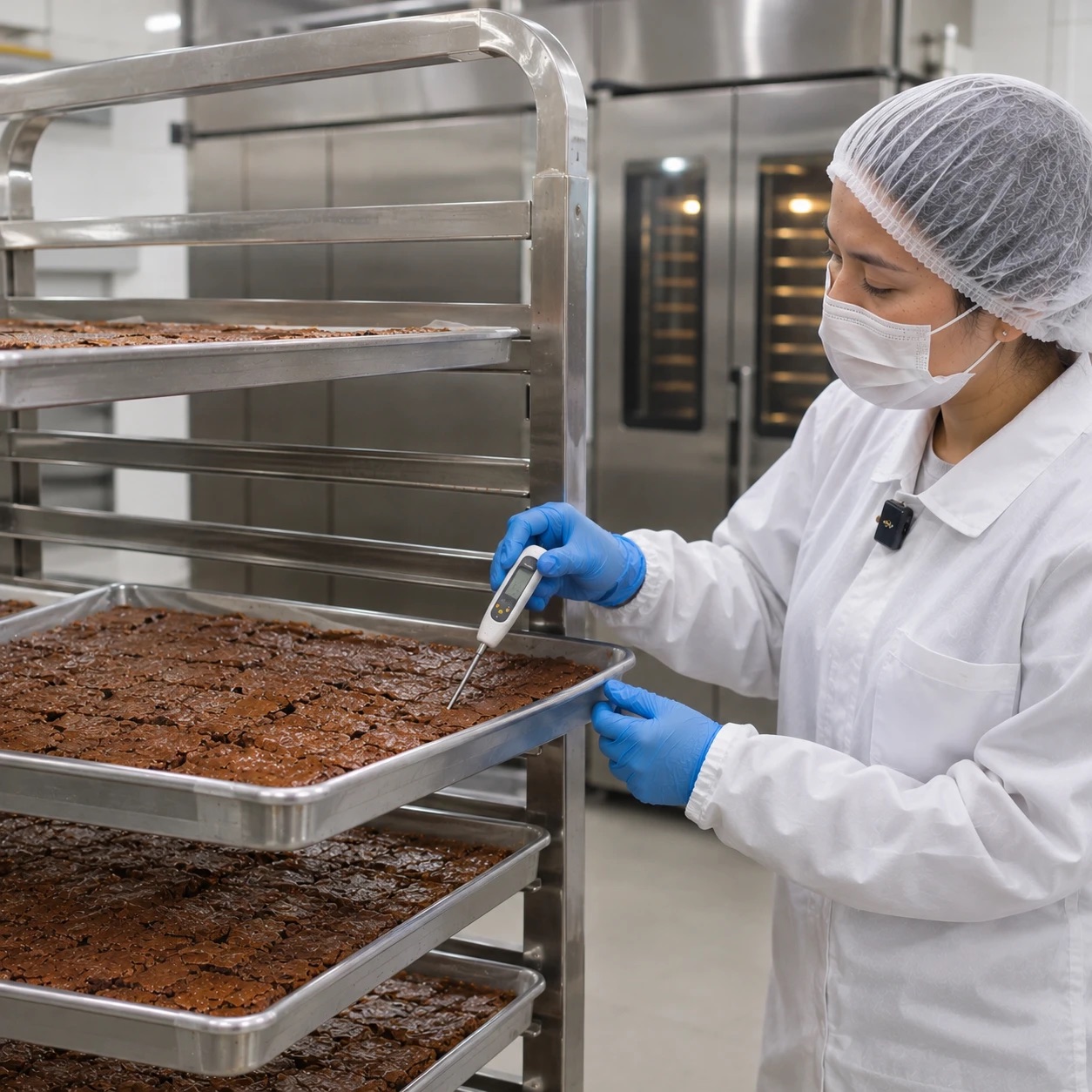
In a food plant, a critical control point is only as good as its record. The oven may have reached the right temperature, but if the log was filled in at the end of the shift, without the time or the reading, the auditor sees a gap, not a safe product.
This guide covers what a CCP monitoring record has to contain, where paper and spreadsheet logs fall short, and how capturing the check by voice, at the moment it happens, produces a record that is ready for review and audit.
What the rules expect from a monitoring record
For meat and poultry plants under USDA, 9 CFR 417.5 asks for records of CCP monitoring with the actual times, temperatures or other values, corrective actions, verification and calibration of the instruments. It also says that each entry must be made at the time the event occurs, include the date and time, and be signed or initialed by the employee making it.1 Records kept on computers are acceptable with controls that protect the integrity of the data and signatures.1
For plants under FDA preventive controls, 21 CFR 117.305 asks that records contain the actual values and observations, be accurate, indelible and legible, be created at the same time as the activity, and include the date, the time when appropriate, the initials of the person, and the product and lot code where appropriate. Electronic records are allowed.2
Certification schemes such as SQF, BRCGS and FSSC 22000 build on the same idea: show the real value, when it was taken, by whom, and what was done when it was out of limits.
Where paper logs fall short
- Filled in later: readings written from memory at the end of the shift, or copied from another sheet.
- Missing pieces: no time, no initials, no lot, or a checkmark instead of the actual value.
- Deviation without the story: the out-of-limit reading is there, but the corrective action and the recheck are on another page, or nowhere.
- Review is slow: QA has to chase binders before signing off, and an audit becomes days of preparation.
A CCP check, spoken
With Cosito, the operator says the check at the line, with the probe still in the product:
“Oven two, brownies, batch two-fourteen, center at one eighty-eight.”
Cosito records the actual value against the critical limit for that check. If it is out of range, it is flagged as a deviation right away, and a corrective action is required:
“Baked four more minutes, now two-oh-one. Oven runs cold at the back.”
The recheck is recorded and linked to the deviation. The same applies to cold room logs, scale calibration with test weights and metal detector checks with test pieces.
What the record contains
- The actual value and the critical limit it was checked against.
- The date and time the check was made, not when it was typed.
- The person who made it, the product and lot, and the equipment.
- The corrective action and recheck when a value was out of range, with the operator’s own words.
- Photos when useful, taken in the Cosito mobile app.
- The QA review and signature. Once signed, records lock, with a full audit trail.
Audit-ready, any day
Because every check is captured when it happens, QA sees the week at a glance: how many checks were done on time, which deviations were corrected, and whether anything is missing. When an inspector or auditor asks, the full log can be shared as a PDF, by line, product or date.
Frequently asked questions
Are records captured by voice acceptable for HACCP?
Electronic records are allowed under FDA 21 CFR 117.305 and, with integrity controls, under USDA 9 CFR 417.5. What matters is that the record has the actual value, the time, the person and the corrective action. Confirm the details of your plan with your auditor or certification body.
Does Cosito replace my HACCP or food safety plan?
No. Your plan defines the CCPs, limits and frequencies. Cosito captures the monitoring, deviations, corrective actions and review so the records match the plan.
Which checks can be captured?
CCP temperatures, cold rooms, scale calibration, metal detector tests, sanitation and other production checks that are part of your formats.
Can it handle bilingual crews?
Yes. Operators can speak English, Spanish or both in the same sentence.
Sources
- 9 CFR 417.5, Records, Electronic Code of Federal Regulations (USDA FSIS).
- 21 CFR 117.305, General requirements applying to records, Electronic Code of Federal Regulations (FDA).